
Marangu Route
Climb Mount Kilimanjaro Through Tanzania's Historic Hut Trail
The Marangu Route, famously known as the Coca-Cola Route, is the oldest and only Mount Kilimanjaro climbing route offering comfortable mountain hut accommodation instead of camping. Ideal for first-time climbers, this classic trail combines gradual trekking, breathtaking alpine scenery, and one of the most enjoyable ways to reach Uhuru Peak (5,895m).
5 – 6 Days
We highly recommend the 6-Day Itinerary over 5 days to optimize high-altitude comfort.
Moderate
Features wide, gentle gravel paths without technical scrambles or steep stone walls.
Varies by climber
The 5-day route has low success rates, but the 6-day option raises average success significantly.
Mountain Huts
Cozy wooden bunk beds with mattresses. No tents required, keeping you warm on chilly nights.
Why Choose the Marangu Hill-Path?
The Marangu Route is a classic, established pathway on Mount Kilimanjaro, loved by many climbers for its traditional style.
Permanent Wooden Huts
Enjoy a dry wooden roof overhead on wet nights. A fantastic choice for the rainy seasons.
Well-Established Trail
Wide, gradual paths with gentle terrain. No steep climbing scrambles or vertical walls to scramble.
Traditional Vibe
Kilimanjaro's original pioneered path, historical markers, and warm communal dining halls.
Easier Logistics
The direct climb out and back down reduces gear logistics, keeping team footprints small.
Interactive Marangu Route Map
Click on the key campsites along the path to study the ascending elevation profile, terrain transitions, and physical characteristics of your Mount Kilimanjaro trek.
Marangu Gate (1,860m)
The historic park checkpoint where our guides register permits and prepare our luggage team.
Detailed 6-Day Marangu Route Itinerary
Marangu Gate to Mandara Hut
Daily Highlights
Register at the historic gate, trek past beautiful streams, and sleep inside cozy wooden A-frame huts.
Trekking Description
Following a drive from Moshi or Arusha, we arrive at Marangu Gate. After registering with park rangers, we walk up a beautiful trail winding through a lush green rainforest canopy. We listen to birds and watch for monkeys before arriving at Mandara Hut for a hot dinner and a comfortable bed.
Mandara Hut to Horombo Hut
Daily Highlights
Leaving the trees behind, we catch stunning views of Mawenzi and Kibo Peaks, and rest at our major hut base.
Trekking Description
Our trail climbs out of the lush forest into the expansive, spectacular moorland zone. We walk past giant lobelias and unique groundsels. The path is gentle and wide, leading us to Horombo Hut. This is a large mountain village of A-frame huts offering amazing views of the clouds floating below.
Horombo Hut Acclimatization Day (Highly Recommended)
Daily Highlights
Critical rest day. Hike to zebra rocks or Mawenzi Ridge to trigger essential oxygen adjustment.
Trekking Description
Adding this extra day is highly recommended to improve your chance of reaching the summit of Mount Kilimanjaro. We hike up past the unique, black-and-white-striped Zebra Rocks to Mawenzi Ridge for stunning views of the saddle, then return to Horombo Hut for hot soup and rest.
Horombo Hut to Kibo Hut
Daily Highlights
Cross the stark volcanic 'Saddle' between Mawenzi and Kibo. Prepare gear for the midnight summit climb.
Trekking Description
We climb higher into the alpine desert zone, crossing the dry, windswept 'Saddle' that connects Kibo and Mawenzi Peaks. This rocky plain is silent and cold. We arrive at Kibo Hut, a solid stone barracks, where we enjoy a hot meal and rest early for our midnight summit attempt.
Kibo Hut → Uhuru Peak → Horombo Hut
Daily Highlights
The Summit Day. Stand on Uhuru Peak, 'The Roof of Africa' (5,895m) at sunrise, then descend to Horombo Hut.
Trekking Description
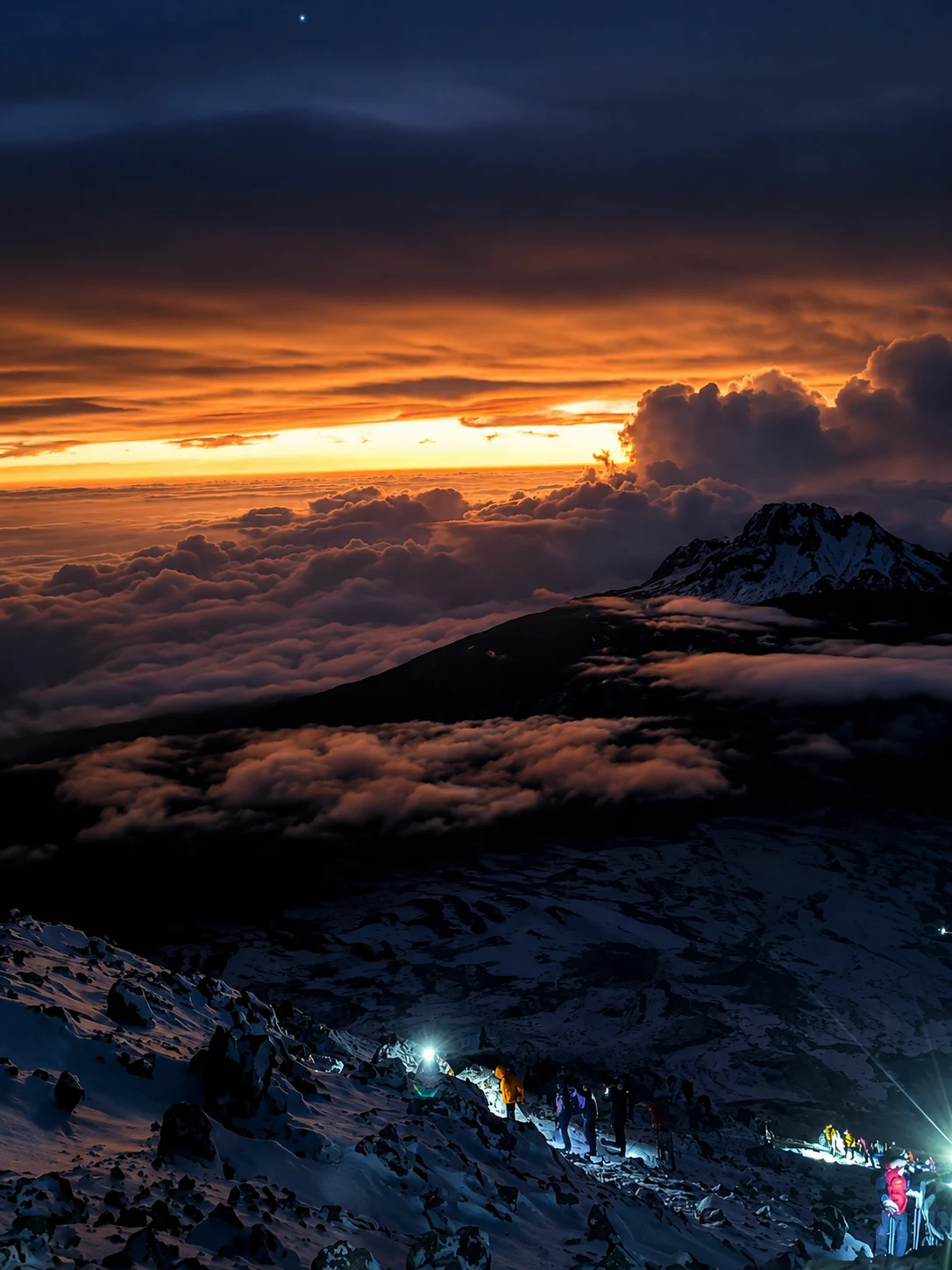
We start our climb at midnight by headlamp, trekking slowly ('pole pole') up steep volcanic scree under the stars. By sunrise, we reach Gilman's Point on the crater rim. After a final push, you stand at Uhuru Peak (5,895m)! We enjoy the incredible view, then descend back to Horombo for a comfortable rest.
Horombo Hut to Marangu Gate
Daily Highlights
Descend through forest trails, receive gold-bordered certificates, and celebrate with our team.
Trekking Description
A long, pleasant descent down through the moorland and rainforest. The air grows warmer and richer in oxygen. At Marangu Gate, we register your achievement and receive your official gold certificate. We bid a warm temporary farewell to our hardworking crews and drive back to comfort.
How an Extra Night at Horombo Hut Optimizes Summit Success
Shorter climbs can make body adjustment difficult. On the Marangu Route, the physical trails are pleasant, but ascending quickly over 5 days causes fatigue.
By taking the highly recommended 6-Day Itinerary, you add a critical rest day at Horombo Hut. This extra night gives your respiratory system the necessary time to adapt safely.
More time on the mountain allows a more gradual ascent. Summit outcomes depend on acclimatization, individual health, weather and guide decisions; reaching the summit is never guaranteed.
6-Day Marangu Path
An extra day for acclimatization on the hut-based route.
Kilimanjaro Itinerary Duration Comparison
Compare trekking durations across major Mount Kilimanjaro paths:
Permanent Hut Living Explained
Ditching outdoor tents for sturdy wooden cabin shelters is the major differentiator on the Marangu Route. Explore our key mountain hut stations.
Horombo Hut (3,720m)
Included Facilities
Solar-powered lights, clean wash basins, giant Senecio gardens, and clear views of Mawenzi Peak.

Marangu Route Cost & Inclusions
We list clear, fair price estimates with high-security inclusions to prevent any hidden fees behind the line.
What's Included
- All mandatory Mount Kilimanjaro National Park conservation fees.
- Mandara, Horombo, and Kibo Hut station dormitory permits.
- National park search-and-rescue support network coverage.
- Professional high-altitude guides, porters, and mountain chefs.
- Three hot communal kitchen courses served daily in the dining halls.
- Private luggage transport (up to 15kg carried per climber).
Not Included
- International flight tickets and Arusha entry visa fees.
- Mandatory personal medical search travel insurance plans.
- Standard customary guide and porter tips (highly appreciated).
- Personal high-altitude cold weather gear (sleeping bags, shells).
Official Climb Pricing Tier
These are the official Mount Kilimanjaro climb prices. All rates are **per person** and include **two hotel nights** (pre- and post-climb), full park concessions, certified mountain medical rescue support, and ethical porter wages.
Marangu Route
6 Days ExpeditionLock down slots now. Booking deposits are subject to our cancellation policy; date changes may incur supplier fees. Review our terms and conditions before booking.
Ethics & Safety Standards Included
Our operating standards prioritise fair porter wages, suitable sleeping equipment, adequate food rations, and clear crew-welfare checks. Ask us for the current standards included with your climb.
Full Group Tier Pricing Sheet for Marangu Route (6 Days)
Compare exact rates per climber depending on your booking party size. No hidden fees.
Best Time to Climb Marangu Route
Warm & Dry (Excellent Visibility) Season conditions:
Crisp mornings, minimal mist, and dry trail surfaces.
Vibe: Clear views of both Horombo Hut and Mawenzi Peak. Active yet comfortable climbing community.
Marangu Route vs Other Kilimanjaro Paths
Uncover key layout tradeoffs across the 5 premier climbing trails around Kilimanjaro.
Camping vs Huts
Machame features outdoor camping tents and slightly steeper slopes. It has a higher success rate because of the natural 'climb high, sleep low' profile. Marangu stays drier inside wooden cabins.
The Quiet western Start
More time on the mountain allows a more gradual ascent. Summit outcomes depend on acclimatization, individual health, weather and guide decisions; reaching the summit is never guaranteed.
The Wilderness North
Rongai starts in the dry north near the Kenyan border, offering high safety against monsoons. Marangu is more central and closer to Moshi/Arusha transit routes.
The Ultimate Grand Traverse
The grand 9-day Northern Circuit has the highest success rating of all Kilimanjaro routes, walking around the north slope. Marangu is a direct, shorter out-and-back trail.
Packing Essentials for the Marangu Route
Since you aren't sleeping on floor mats in tents, you don't need a heavy thermal ground pad on the Marangu Route. Wooden cabin tables and beds are pre-provided.
However, you still need a high-performance **four-season sleeping bag** rated to at least 0°F (-18°C), as Kibo Hut stay becomes extremely chilly on high ridge altitudes.
Tap on items in our mini-checklist to keep track of your summit preparations:
Interactive Summit Pack Checklist:
Frequently Asked Questions About the Marangu Route
Planning to climb Mount Kilimanjaro via the Marangu Route? Here are answers to the questions we receive most often about hut accommodation, itinerary options, summit success rates, costs, acclimatisation, and choosing the best Kilimanjaro route for your adventure.
Yes. The Marangu Route is one of the most beginner-friendly routes on Mount Kilimanjaro because it follows wide, gradual trails and is the only route that offers mountain hut accommodation instead of camping. We recommend the 6-day Marangu Route rather than the shorter 5-day itinerary because the additional acclimatisation day greatly improves your chances of reaching Uhuru Peak.
The Marangu Route is physically less demanding than the Machame Route because there are no steep scrambling sections such as the Barranco Wall. However, the traditional 5-day Marangu itinerary gives climbers less time to acclimatise, which is why we strongly recommend the 6-day itinerary for a safer and more successful Kilimanjaro climb.
The Marangu Route is the only Mount Kilimanjaro route with permanent hut accommodation. Climbers stay at Mandara Hut, Horombo Hut, and Kibo Hut, where bunk beds, mattresses, shared dining areas, and communal washrooms are provided. You only need to bring a warm sleeping bag and your personal trekking equipment.
More time on the mountain allows a more gradual ascent. Summit outcomes depend on acclimatization, individual health, weather and guide decisions; reaching the summit is never guaranteed.
The cost of climbing the Marangu Route depends on your group size, travel dates, and package inclusions. Because every Kilimanjaro climb is customised, we provide personalised quotations instead of fixed prices. Your package typically includes Kilimanjaro National Park fees, hut accommodation, professional mountain guides, porters, meals, safety equipment, and transfers.
Yes. The additional acclimatisation day at Horombo Hut is one of the biggest advantages of the 6-day itinerary. It allows your body to adapt more gradually to the altitude, reduces the likelihood of altitude sickness, and significantly improves your chances of standing on Uhuru Peak.
The best time to climb the Marangu Route is during the dry seasons from January to March and June to October. These months usually provide clearer skies, drier trails, excellent visibility, and more comfortable trekking conditions throughout Mount Kilimanjaro.
Choose the Marangu Route if you prefer sleeping in mountain huts instead of tents, enjoy a steady and gradual ascent, and want to experience Kilimanjaro's oldest and most historic climbing route. It is an excellent choice for beginners, families, and climbers looking for extra comfort during their expedition.
Related Climbing Routes
Machame Route
The famous 'Whiskey Route'. Beautiful views with high success rates.
Lemosho Route
Quiet western approach with superb acclimatization.
Rongai Route
Dry northern trail with steady shelter from seasonal rains.
Northern Circuit
The grand 9-day loop. Ultimate success margin.
Ready To Climb Kilimanjaro?
Our local mountain experts will help you choose the best route and prepare for a successful summit.
Summit success cannot be guaranteed. Compare itinerary duration and acclimatization profiles, and discuss high-altitude travel with a qualified clinician. See the CDC guidance on altitude illness.