
The Great Migration Guide: Everything You Need To Know
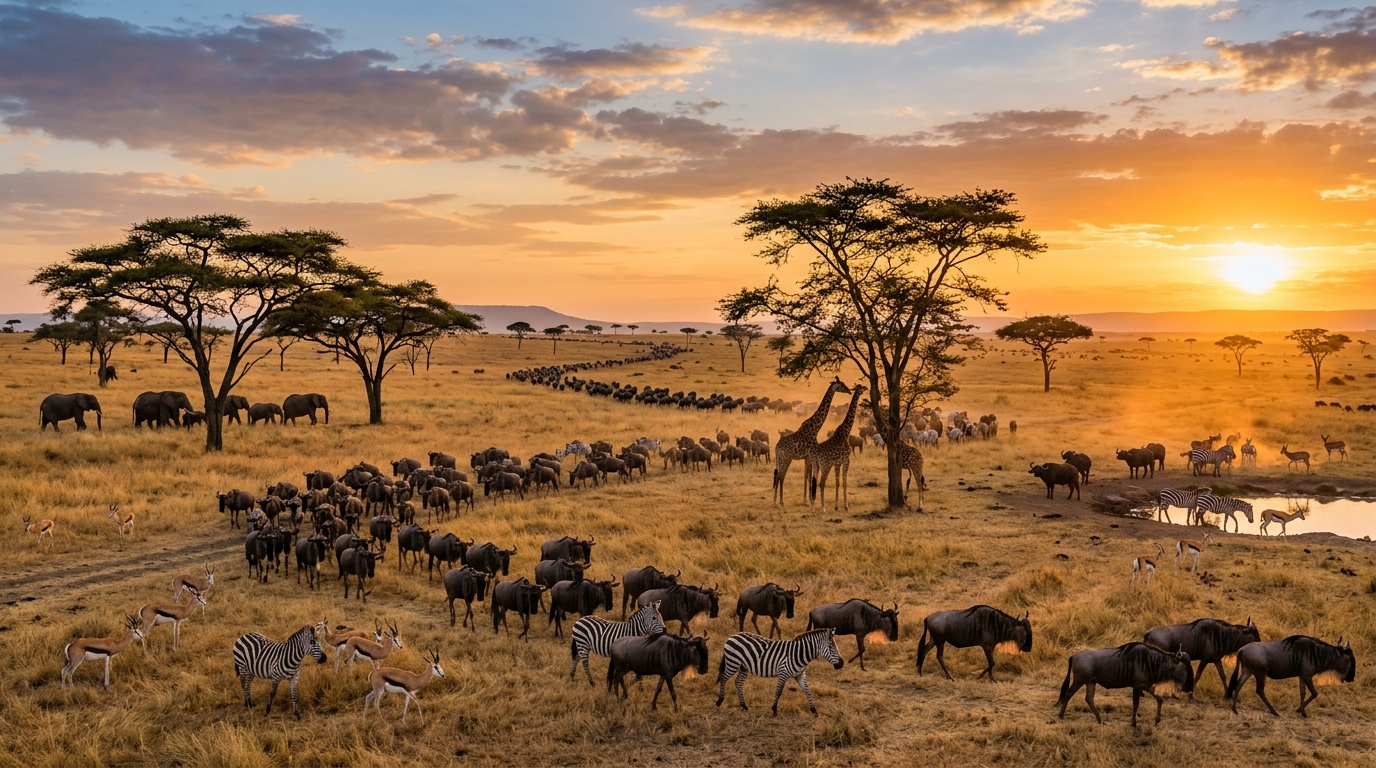
Every year millions of wildebeest, zebras, and gazelles move across the Serengeti ecosystem in one of the most extraordinary wildlife migrations on Earth.
An instinct-driven survival masterpiece.
The Great wildebeest Migration is the largest overland terrestrial migration of wildlife on earth. Stretching across the Serengeti National Park of Tanzania and spilling over borders into Kenya's Maasai Mara, this natural marvel is a perpetual circular movement. It is driven purely by ancient genetic memory following seasonal rain patterns and fresh pasture growth.
Over 1.5 million wildebeests, 400,000 zebras, and 200,000 Thompson's gazelles charge perpetually through high rivers, predator ambushes, and dry sand plains. This monumental collection of life supports the health of the entire Serengeti ecosystem, providing key nutrient balances and feeding hundreds of active lions, leopards, and Nile crocodiles along their path.
A DELICATE EQUILIBRIUMWildebeest and zebra travel symbiotically. Zebras feed on the tough, tall stalks of grass, exposing the soft, tender new shoots underneath which are preferred by the selective wildebeests.
What is the Great Migration?
The migration is a constant, circular engine that never finishes. It occurs within the boundaries of the Serengeti Ecosystem, encompassing the Serengeti National Park, Ngorongoro Conservation Area, Grumeti Reserves, and Kenya's adjoining Maasai Mara.
The trigger is rain. As local thunderstorms erupt, these massive antelopes detect low-frequency sound vibrations from hundreds of kilometers away and instantly pivot their march toward the moisture. Their sharp hooves aerate soil, while their high digestive yields replenish and fertilize local grasses.
The Great Migration Month by Month
Unlike static animal movements, the migration shifting spots are highly predictable by month. Click on individual lines to see where the herds reside.
January — Calving Season Begins
The herds gather on the nutrient-rich southern plains as thousands of wildebeest calves begin to arrive.
Best Time to See the Great Migration
Depending on whether you wish to observe massive river crossings, newborn calving, or quiet green valleys. Select your target season:
Calving Season
Located on the southern Ndutu plains, witness thousands of newborn wildebeests take their first steps as predators prepare surrounding active hunts.
Herd Movement
Watch spectacular miles-long columns march across central plains and Western Grumeti river systems with fewer neighboring tourists.
River Crossings
The iconic cliff-dives. Witness high-tension plunges across the crocodile-dense Mara and Grumeti rivers under raw Serengeti sky.
Southern Return
As winter rains fall on southern meadows, watch the massive columns double-back southwards along Lobo and eastern corridor lanes.
Mara River Crossings: The Intense Battle
Nothing compares to the dramatic tension of a Mara River crossing. Stretching across northern Serengeti, the river runs deep and fast. Millions of wildebeests gather on elevated dusty banks, shifting and bellowing for days and waiting for a single courageous beast to make the leap:
Nile crocodiles growing up to 6 meters float silently near sandy rapids, waiting to latch onto swimming targets.
Southern banks host lionesses and leopards who exploit exhausted survivors scrambling up steep, muddy paths.
Capture dramatic splash actions, back-lit dust clouds, and direct predator clashes under professional guidance.
Because crossings are organic, our expert guides position the land cruiser safely for hours to guarantee sightings.
Wildlife Active During the Migration
While wildebeests form the massive core, several other animals run alongside and exploit this seasonal movement cycle.
The main, single-minded traveler numbering 1.5 million.
Co-patrols the savannah feeding on high grass stalks.
Dainty gazelle groups browse dry vegetation behind herds.
Large savannah prides hunt daily in areas around Seronera.
Tree-bound ambushers secure prey along river corridors.
Sprinters track gazelle young across southern Ndutu soil.
Social clans follow marching lines looking to steal carcasses.
Colossal Nile reptiles ambush animals during water crossings.
Scores of active birds of prey cleans plains after hunts.
Glorious bird groups arrive during rainy seasons.
Best Places to Witness the Migration
Sighting coordinates shift by section throughout the seasons. Plan your target destinations:
1. Southern Serengeti & Ndutu
January – March | Birthing Meadows
Flat green grasslands offer magnificent fields of vision. Watch thousands of calves take their first steps and run alongside big predator prides.
2. Central Serengeti & Grumeti
April – June | Long Savanna Trails
Observe the migration as columns coalesce. Exceptional leopard and lion viewing along the Seronera river line.
3. Northern Serengeti & Mara
July – October | Crossing Cliffs
The ultimate drama epicenter. Watch beasts plunge into cold waters and battle crocodiles under open horizons.
Our Great Migration Safari Packages
Choose pre-vetted custom itineraries with direct, private booking paths.
Great Migration Safari
Focus on high-tension river crossings and vast plain columns in northern and central Serengeti. Complete private safaris under expert guides.
Luxury Safari
Premium private concession lodges, hot showers, gourmet dinners under lantern light, and chartered lightweight fly-in flights.
Private Safari
Enjoy dedicated custom land cruisers, private guides, and tailored routing schedules based entirely on your group pacing.
Photography Expeditions
Early game drives matching soft light, heavy duty camera stabilization sandbags, and guides skilled in high-action positioning.
Family Safari
Safe luxury campgrounds featuring family pavilions, low road times, and customized junior track classes for kids.
Fly-In Safari
Bypass long road travel with scheduled flights departing directly from Arusha into northern and central bush airstrips.
Great Migration for Photographers
Securing publication-ready wildlife imagery along the migration routes requires technical patience, right timings, and structured vehicle alignments. Review our absolute gear advice:
- 1. River Crossing Photography: High shutter speeds (1/1600s – 1/2000s) are key to freeze flying mud, splash water drops, and dramatic climbing activities. Use continuous burst mode configurations.
- 2. Essential Gear: A high-quality telephoto lens (100-400mm or 500mm prime) pairs beautifully with a secondary fast zoom lens (24-70mm) to capture vast landscape groups. Settle cameras onto custom vehicle sandbags.
- 3. Light Conditions: Golden hours (6:30am – 8:00am and 5:00pm – 6:30pm) project smooth, rich horizontal sunbeams, transforming savanna dust into spectacular gold hazes.
How Many Days Do You Need?
Choose the timing that aligns with your timeline, budget, and physical comfort.
Ideal for fly-in visitors with brief timelines. Direct transit to Central Seronera for 2 full days of predator tracking inside migration lanes.
The standard benchmark. Combine 3 full days of Serengeti game drives with overnight stops in Ngorongoro or Tarangire elephant forests.
Highly recommended. Track both central pride territories and remote northern/western river crossing boundaries without rushing.
The ultimate wilderness masterclass. Combine walking safaris with armed rangers, ancestral tribe interactions, and quiet southern grasslands.
Where Should You Stay?
Safari properties are grouped into distinctive functional categories. Settle into layouts that balance your target comfort, luxury budget, and visual goals:
- 1. Luxury Lodges: Substantial brick structures offering private balconies, freestanding hot bathtubs, private cooling pools, and panoramic views of running plains.
- 2. Luxury Mobile Camps: High-end safari canvas layouts that shift locations twice yearly to remain within a few miles of active wildebeest herd positions. Settle into canvas suites with flush toilets and warm bucket running showers.
- 3. Mid-Range Camps: Comfortable, statically positioned tent camps inside or outside park boundaries, featuring comfortable beds, delicious dining tables, and running solar power.
Great Wildebeest Migration FAQ
Related Tanzania Travel Guides
Expand your planning expertise with our masterclass destination deep dives.
Why Travel with Kilimanjaro Africa Safaris?
We leverage direct local infrastructure and certified native guides to craft unbeatable travel moments.
Headquartered locally in Arusha, our direct operational pipelines allow beautiful, transparent travel arrangements devoid of foreign desk markups.
Our seasoned drivers study hourly weather shifts and migration radio nets to align vehicle spots exactly with running herd coordinates.
All naturalist drivers undergo certified annual ecological, safety, and multilingual training to ensure first-class service.
Ready To Witness The Great Migration?
Experience one of the world's greatest wildlife spectacles with expertly planned Tanzania safaris designed around the migration season.